
 By Kshemahealthcare
1. Introduction: The Evolution of Joint Replacement
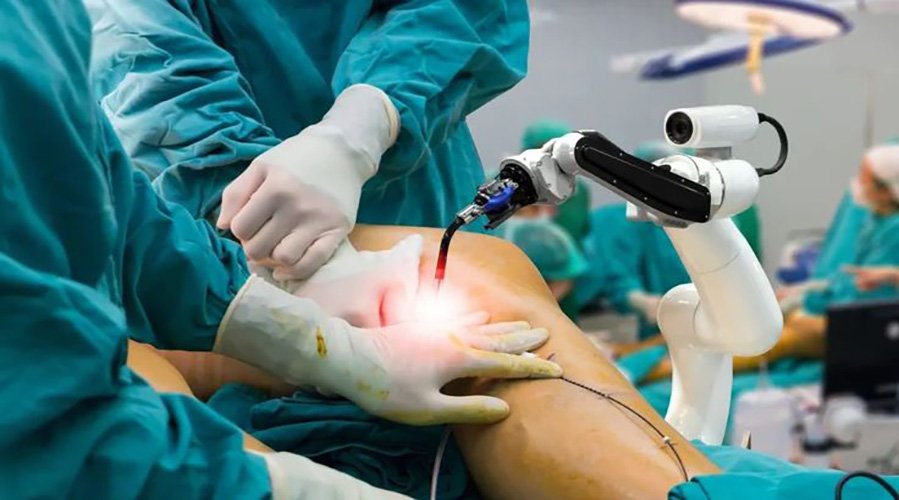
Start by acknowledging that knee pain from osteoarthritis can be debilitating, affecting every step you take. While traditional knee replacements have been successful for decades, the integration of robotics has ushered in a new era of “personalized surgery.” Explain that the robot doesn’t replace the surgeon; rather, it acts as a high-precision GPS, ensuring every movement is guided by data specific to the patient’s unique anatomy.
2. How Robotic Technology Works
Explain the process in simple terms to demystify the “robot.”
- Pre-Surgical Mapping: Most systems use advanced software to create a 3D model of the patient’s knee.
- Intra-Operative Data: During the procedure, the surgeon uses sensors to track the knee’s range of motion and ligament tension in real-time.
- The Velys System (or similar): Mention that Kshema Healthcare utilizes cutting-edge systems that allow surgeons to make bone cuts with sub-millimeter accuracy.
3. Key Benefit: Unmatched Precision and Alignment
In traditional surgery, surgeons use manual guides and “eye-balling” to align the implant.
- The Precision Edge: Robots ensure the implant is placed at the exact angle required for that specific patient.
- Why it Matters: Proper alignment reduces wear and tear on the new joint, potentially extending the life of the implant and making the knee feel more “natural” during movement.
4. Key Benefit: Tissue Preservation and Less Pain
Because the robotic arm is programmed to stay within specific boundaries, there is significantly less damage to the surrounding soft tissues, muscles, and ligaments.
- Reduced Trauma: Less “surgical trauma” translates directly to less post-operative swelling.
- Lower Pain Scores: Patients often report needing less pain medication during the first few weeks of recovery compared to traditional methods.
5. Key Benefit: Faster Recovery and Discharge
One of the biggest concerns for patients is: “How soon can I walk?”
- Earlier Mobility: Due to the precision and minimal tissue damage, many patients can stand and take their first steps within hours of surgery.
- Shorter Hospital Stays: Precision surgery often allows for “enhanced recovery protocols,” getting patients home to their own beds faster, which reduces the risk of hospital-acquired infections.
6. Is it Right for You?
Conclude by addressing the audience. Robotic knee replacement is ideal for patients with:
- Severe osteoarthritis that hasn’t responded to conservative treatments.
- Complex anatomy or previous injuries.
- A desire to return to an active lifestyle (golfing, trekking, or playing with grandkids).
Leave A Comment